
2026 - Bloomsbury Publishing
ID: 6347560
E-book EPUB
Consultabile con Torrossa Reader (scopri come)
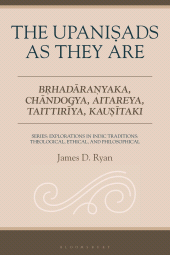
The Upanisads as They Are : Brhadaranyaka, Chandogya, Aitareya, Taittiriya, Kausitaki
This book argues that the early classical Upanisads constitute a \u0022field of wildflowers" of insight that later Vedanta has tried to fashion into a proper garden. These Upanisads (c. 800-300 BCE) are almost always read from the point of view of the later Vedantins, but they do not share in the neatly tailored characteristics of the mature Vedantic philosophies, representing, instead, divergent, variegated and even conflicting narratives. The author focuses on the earliest of these Upanisads: B?hadara?yaka, Chandogya, Aitareya, Taittiriya and Kau?itaki Upani?ads. These Upani?ads are read \u0022as they are," emphasizing aspects of these texts that are often completely overlooked, among them: their Vedic approach to contradiction, their frequent acceptance of means other than gnostic knowledge of or veneration of atman/brahman as a means for liberation, their positing of entities/realities other than atman or brahman as totalistic, and their frequent depiction of the human body or embodied human as a
microcosm of or in identity with the universe. In course, the interpretations of the Upani?adic view, the Vedantic view, for each of these Upani?ads, of Sa?karacarya (c. 800 CE) and Ramanujacarya (c. 1100 CE), as primary examples in the range of Upani?adic interpreters, will be examined and often refuted [Publisher's text]
532618 characters.
-
Informazioni
Iva esclusa
 EPUB
EPUB E-book
Leggi le condizioni d'uso