
2023 - Scrivener Publishing
ID: 6334397
E-book PDF (8,13 Mb)
Compatible solo con Adobe Acrobat Reader - software gratuito - (descubra cómo abrir los archivos)
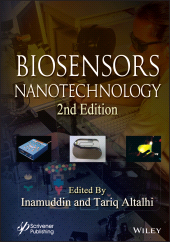
Biosensors Nanotechnology
512 p.
offered and R D and manufacturing are enhanced. In this fast-evolving discipline, the combination of nanoscale materials with biosensor technology has gained a lot of traction. Nanostructures have been used to increase the adherence of biosensor materials to electrode surfaces, print nano barcodes on biomaterials, increase the pace of bio-responses, and amplify the electric signal. Some of the topics discussed in the book include: Bioreceptors for Cells; Bioreceptors for Enzymatic Interactions; Dendrimer-Based Nanomaterials for Biosensors; Biosensors in 2D Photonic Crystals; Bioreceptors for Affinity Binding in Theranostic Development; Biosensors for Glucose Monitoring; Metal-Free Quantum Dots-Based Nanomaterials for Biosensors; Bioreceptors for Microbial Biosensors; Plasmonic Nanomaterials in Sensors; Magnetic Biosensors; Biosensors for Salivary Biomarker Detection of Cancer and Neurodegenerative Diseases; Design and Development of Fluorescent Chemosensors for the Recognition of Biological Amines and Their
Cell Imaging Studies; Application of Optical Nanoprobes for Supramolecular Biosensing; In Vivo Applications for Nanomaterials in Biosensors; Biosensor and Nanotechnology for Diagnosis of Breast Cancer; Bioreceptors for Antigen–Antibody Interactions; Biosensors for Paint and Pigment Analysis; Bioreceptors for Tissue; Biosensors for Pesticide Detection; and Advances in Biosensor Applications for Agroproducts Safety.AudienceThe book is written for a large and broad readership including researchers, industry engineers, and university graduate students from diverse backgrounds such as chemistry, materials science, physics, pharmacy, medical science, biomedical engineering, electronics engineering, and nanotechnology. [Publisher's Text]
1136926 characters.
-
Información
ISBN: 9781394167128
IVA excluido
PDF
E-book
E-book
Consulta las condiciones de uso